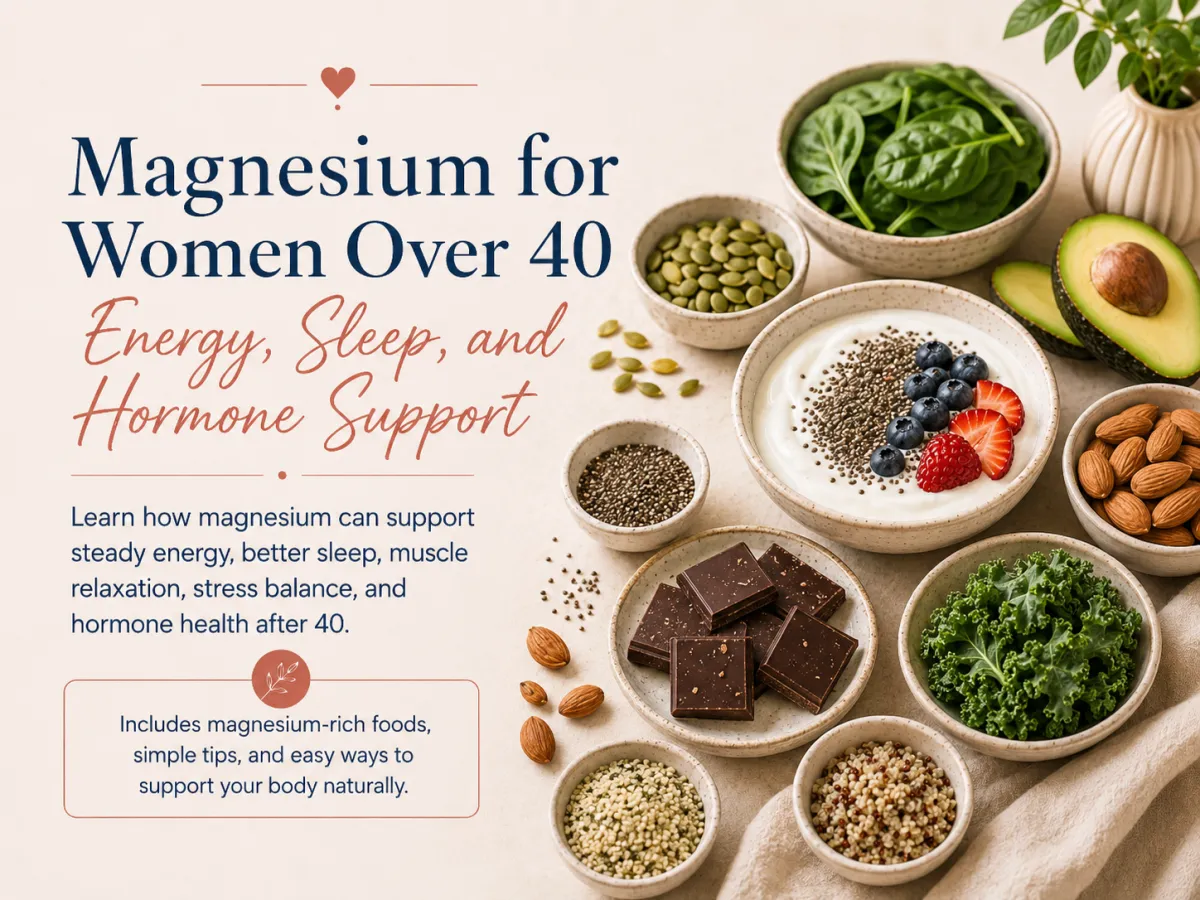
Magnesium for Women Over 40: Energy, Sleep, and Hormone Support
Magnesium for Women Over 40: Energy, Sleep, and Hormone Support
Magnesium is one of the most important minerals for women over 40, yet nearly half of us are not getting enough from our diets. If you have been struggling with poor sleep, low energy, muscle cramps, anxiety, or stubborn cravings, magnesium may be a missing piece. This guide covers why magnesium matters more after 40, the signs you may be running low, the best food sources, and when supplements might be worth considering.
Category: Nutrition and Metabolism | Read time:7 minutes
Key Takeaways
Magnesium is involved in more than 300 biochemical processes in the body, including energy production, muscle function, sleep regulation, and hormone balance.
Nearly 50 percent of Americans do not get enough magnesium from their diets.
During perimenopause, magnesium needs may increase due to its role in supporting sleep, mood, muscle recovery, and blood sugar regulation.
Magnesium-rich foods include leafy greens, nuts, seeds, legumes, and dark chocolate.
Why Magnesium Matters More After 40
Magnesium is the fourth most abundant mineral in the body and is involved in more than 300 enzymatic reactions (National Institutes of Health). It plays a role in energy production, muscle and nerve function, blood sugar regulation, blood pressure control, bone health, and the production of protein and DNA.
Despite how essential it is, magnesium is one of the most common nutritional shortfalls. The NIH Office of Dietary Supplements reports that nearly 50 percent of Americans do not consume enough magnesium from food alone. For women over 40, this gap becomes more significant because the body's need for magnesium increases at the same time that hormonal changes place additional demands on the systems magnesium supports.
Research published in PMC notes that during perimenopause, magnesium has been implicated in the alleviation of vasomotor symptoms, mood disturbances, and sleep problems, while also contributing to cardiovascular and bone health. In other words, magnesium supports many of the exact areas that women over 40 struggle with most.
Signs You May Be Low in Magnesium
Severe magnesium deficiency is relatively uncommon in otherwise healthy people, but subclinical insufficiency, where levels are low enough to affect how you feel without triggering alarm on a standard blood test, is widespread. Common signs include:
Difficulty falling asleep or staying asleep
Muscle cramps, twitches, or restless legs
Feeling anxious, on edge, or easily overwhelmed
Low energy or fatigue that does not improve with rest
Headaches or migraines
Sugar cravings, especially for chocolate
Heart palpitations or a racing heart
Constipation
Difficulty concentrating or brain fog
Increased sensitivity to stress
Many of these symptoms overlap with perimenopause and hormonal imbalance symptoms, which is one reason magnesium insufficiency can go unrecognized. When both are present, addressing magnesium can sometimes ease symptoms that seemed entirely hormonal.
How Magnesium Supports Sleep
Sleep disruption is one of the most common complaints among women over 40. Magnesium plays a direct role in sleep quality because it helps regulate neurotransmitters that calm the nervous system, including GABA, which is the brain's primary inhibitory neurotransmitter.
Research has shown that higher dietary magnesium intake is associated with better sleep quality and a reduced likelihood of daytime fatigue, particularly in women. Magnesium also helps regulate melatonin, the hormone that controls your sleep-wake cycle.
For women navigating perimenopause, where night sweats, racing thoughts, and waking between 2 and 4 AM are common, magnesium can provide meaningful support. It works best as part of a broader sleep strategy. For more on improving sleep after 40, this guide covers practical stepsthat work alongside magnesium.
How Magnesium Supports Energy
Magnesium is essential for the production of ATP, which is the molecule your cells use for energy. Without adequate magnesium, the body cannot efficiently convert food into usable energy, which can show up as persistent fatigue, low motivation, or feeling sluggish even after a full night's sleep.
Magnesium also supports mitochondrial function. Mitochondria are the energy-producing structures inside your cells, and they rely on magnesium to operate effectively. When magnesium is low, mitochondrial efficiency drops, and so does your energy.
For women who exercise regularly or are focused on maintaining muscle after 40, magnesium is especially important. It supports muscle contraction, recovery, and the repair process that happens after physical activity. Adequate magnesium is associated with improved physical performance and reduced muscle soreness.
The Connection Between Magnesium and Blood Sugar
Magnesium plays a role in insulin signaling and glucose metabolism. Research consistently shows that lower magnesium intake is associated with a higher risk of insulin resistance and type 2 diabetes. The American Diabetes Association notes that magnesium supplementation may improve insulin sensitivity in people who are deficient.
For women over 40 who are working on blood sugar balance, ensuring adequate magnesium is a practical step that supports the broader picture. It complements the effects of protein and fiber by helping the body process glucose more efficiently.
Magnesium and Hormone Balance During Perimenopause
Magnesium supports several pathways that are directly relevant to hormonal health during perimenopause:
It helps regulate cortisol, making the body more resilient to stress and supporting nervous system regulation
It supports thyroid function, which can become less stable during perimenopause
It contributes to bone density, which becomes more important as estrogen declines
It helps reduce inflammation, working alongside anti-inflammatory foods to support the body's natural balance
It supports mood and emotional regulation by influencing serotonin and GABA activity
Magnesium is not a replacement for comprehensive hormonal support, but it is one of the most practical nutritional foundations you can build on. For a broader look at the key minerals that support women over 40, this post on minerals for energy and hormones covers the full picture.
Best Magnesium-Rich Foods
The recommended daily intake for magnesium is 320 milligrams per day for women over 30 (National Institutes of Health). The best approach is to include magnesium-rich foods across your meals and snacks throughout the day.
Seeds and Nuts
Pumpkin seeds - around 150 mg per ounce (one of the richest food sources)
Almonds - around 80 mg per ounce
Cashews - around 74 mg per ounce
Chia seeds - around 111 mg per ounce
Flaxseeds - around 40 mg per tablespoon
Leafy Greens
Spinach - around 157 mg per cooked cup
Swiss chard - around 150 mg per cooked cup
Kale - around 30 mg per cooked cup
Legumes
Black beans - around 120 mg per cooked cup
Edamame - around 100 mg per cooked cup
Lentils - around 71 mg per cooked cup
Other Good Sources
Dark chocolate (70 percent or higher) - around 65 mg per ounce
Avocado - around 58 mg per avocado
Banana - around 32 mg per medium banana
Quinoa - around 118 mg per cooked cup
Oats - around 63 mg per cooked cup
A breakfast of oats with pumpkin seeds, chia seeds, and a banana provides a strong magnesium foundation for the day. Adding leafy greens and legumes at lunch and dinner helps maintain levels across all three meals.
Types of Magnesium Supplements and When to Consider Them
If you suspect your magnesium intake is low and you are experiencing symptoms, a supplement may be worth considering alongside dietary improvements. However, not all magnesium supplements are the same. The form of magnesium affects how well it is absorbed and what it does in the body.
Magnesium glycinate- well absorbed, gentle on digestion, and particularly helpful for sleep and anxiety. This is often the best choice for women over 40 looking for overall support.
Magnesium citrate- well absorbed and can help with constipation. A good option if digestive regularity is also a concern.
Magnesium threonate- may cross the blood-brain barrier more effectively and is sometimes recommended for cognitive support and brain fog.
Magnesium oxide- poorly absorbed and more likely to cause digestive side effects. This is the most common form in cheap supplements but generally the least effective.
If you are considering a supplement, starting with a moderate dose and taking it in the evening can support sleep while allowing you to assess how your body responds. As with any supplement, it is worth discussing with a healthcare provider, especially if you take other medications.
A Gentle Place to Start
You do not need to make dramatic changes. Start by including one or two magnesium-rich foods at each meal this week and notice how you feel. Adding pumpkin seeds to a salad, choosing spinach as a side, snacking on a small handful of almonds, or having a square of dark chocolate after dinner are all simple ways to increase your intake without any effort.
If you would like more structured guidance on minerals, supplements, and nutrition for energy and recovery after 40, this month's membership includes a full nutrition and supplement guide designed for women who want to feel stronger, more energized, and better supported.