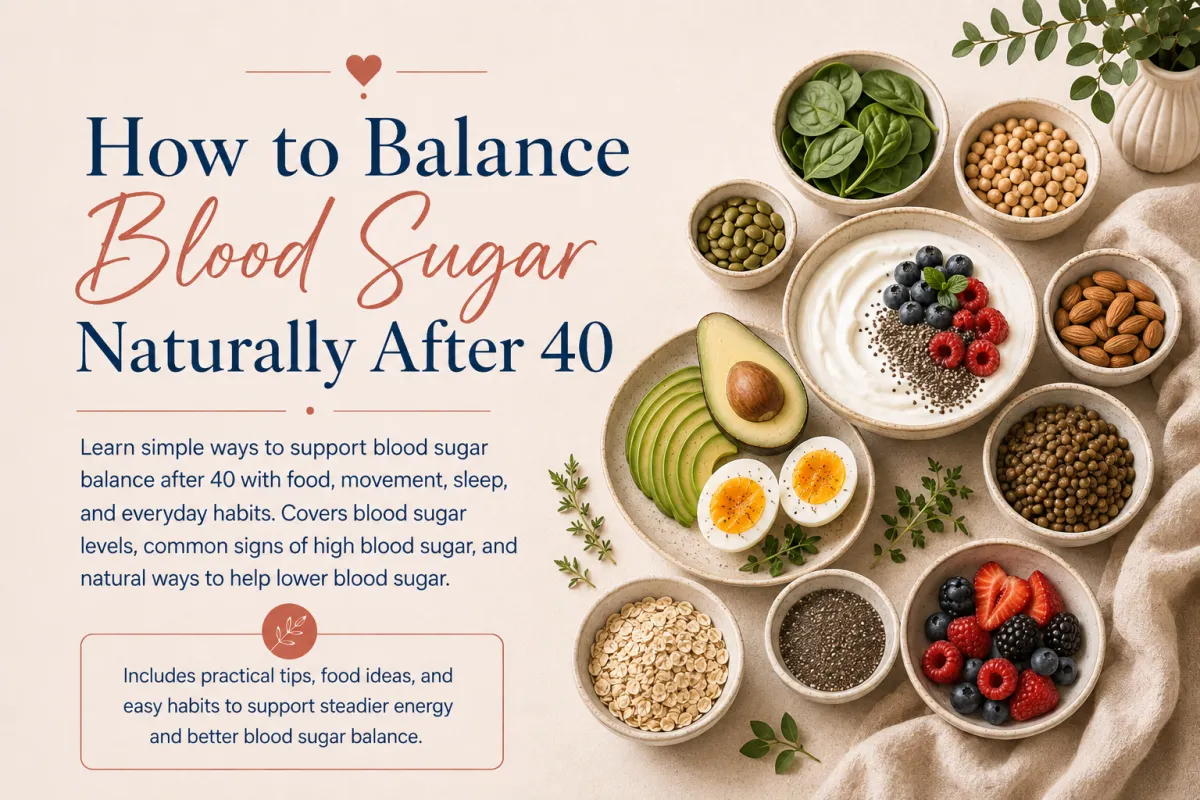
How to Balance Blood Sugar Naturally After 40: Energy, Cravings, and Hormone Support
How to Balance Blood Sugar Naturally After 40
Blood sugar sits underneath almost everything women notice changing after 40. Energy, cravings, sleep, mood, and where the body holds weight all connect back to how steady your blood sugar is across the day. This guide explains what blood sugar actually is, what the numbers mean, and the simple, sustainable ways to support it without restrictive dieting.
Category:Blood Sugar and Metabolic Health | Read time:10 minutes
Key Takeaways
Blood sugar balance is the foundation underneath energy, cravings, hormones, sleep, and sustainable weight support after 40.
Hormonal changes in perimenopause make the body less efficient at handling glucose, even when nothing about your diet has changed.
Knowing your numbers matters. The CDC and Cleveland Clinic both publish clear reference ranges, and they are worth asking about at your next appointment.
The order you eat your food, and the gaps between meals, influence blood sugar as much as what is on the plate.
Small, repeatable changes work better than restriction, which tends to destabilize blood sugar further.
What Blood Sugar Is and Why It Matters More After 40
Blood sugar, or blood glucose, is simply the amount of sugar circulating in your bloodstream at any given moment. It comes mainly from the carbohydrates you eat, and it is your body's most accessible source of fuel.
When you eat, glucose enters your bloodstream and your pancreas releases insulin. Insulin acts as the key that lets glucose move out of the blood and into your cells, where it can be used for energy. In a well functioning system, this happens smoothly and your levels stay within a fairly narrow range.
What changes after 40 is not usually your diet. It is how efficiently that system responds.
As estrogen fluctuates and then declines through perimenopause, cells become somewhat less sensitive to insulin. The same meal that used to be handled easily now produces a bigger rise, and it takes longer to come back down. At the same time, the natural loss of muscle mass that begins in our thirties reduces the amount of tissue available to absorb glucose in the first place.
This is why so many women describe eating exactly as they always have and getting different results. The food did not change. The context did.
What the Numbers Actually Mean
Most women have had blood work done at some point without ever being told what the values mean. Here is the plain version, worth knowing before your next appointment.
Fasting Blood Glucose
This is measured after not eating for at least eight hours, usually first thing in the morning. Cleveland Clinic gives these ranges in mg/dL:
Normal:70 to 99 mg/dL
Prediabetes:100 to 125 mg/dL
Diabetes:126 mg/dL or higher on more than one occasion
A1C
A1C gives a longer view, reflecting your average blood sugar over roughly the previous three months. It is often the more useful of the two because a single fasting reading can be affected by a poor night's sleep or a stressful morning. The CDC gives these ranges:
Normal:below 5.7 percent
Prediabetes:5.7 to 6.4 percent
Diabetes:6.5 percent or above
These ranges are worth knowing because the middle band is where a great deal of quiet change happens. According to the CDC's National Diabetes Statistics Report, 115.2 million American adults have prediabetes. Among adults aged 65 and over, the figure is 52.1 percent.
Prediabetes is not a mild version of diabetes. It is a signal, and it is often reversible with the kind of changes described in this article. If you have not had these markers checked recently, it is a reasonable thing to ask for.
How Blood Sugar Affects Energy, Cravings, Mood, and Weight
The reason blood sugar deserves attention is not the numbers themselves. It is how much of daily life they quietly govern.
Energy
When blood sugar rises quickly, it tends to fall quickly too. That drop is what you feel as the mid afternoon slump, the sudden flatness an hour or two after a carbohydrate-heavy lunch, or the need for something sweet to keep going. Steadier blood sugar produces steadier energy, without the peaks and troughs.
Cravings
Cravings are frequently misread as a lack of willpower. More often they are a physiological request. When glucose drops sharply, the body asks for the fastest possible fix, which is sugar. This is a sensible response to an unstable pattern, not a personal failing.
Mood and Focus
Your brain runs on glucose and is sensitive to sharp changes in supply. Irritability, brain fog, difficulty concentrating, and feeling unreasonably upset when a meal is delayed are all common experiences of blood sugar instability.
Weight
Insulin is a storage hormone. When levels are frequently elevated, the body spends more time storing and less time using stored fuel. This is one reason why eating less does not always produce the expected result. If insulin is consistently high, the underlying pattern has not changed.
Signs Your Blood Sugar May Be Out of Balance
None of these confirms anything on its own. Together, and especially if they are new or worsening, they suggest blood sugar is worth looking at.
Energy crashes in the mid afternoon, often between two and four
Feeling hungry again within two hours of eating
Strong cravings for sugar or refined carbohydrates, particularly in the evening
Feeling shaky, irritable, or unable to think clearly when a meal is delayed
Waking between two and four in the morning
Increased thirst or more frequent trips to the bathroom
Weight settling around the middle despite no change in your eating
Feeling sleepy shortly after meals
Skin tags, or darkened patches of skin on the neck or underarms
That last one is worth mentioning to a doctor, as it can be an outward sign of insulin resistance. There is more detail in this guide to the signs of insulin resistance in women.
How Perimenopause and Estrogen Affect Blood Sugar
Estrogen has a helpful influence on insulin sensitivity. As it declines and fluctuates through perimenopause, that support becomes less reliable, and glucose is handled less efficiently than it was a decade earlier.
Several changes tend to arrive together:
Cells respond less readily to insulin, so more is needed for the same effect
Body composition shifts, with muscle decreasing and fat storage moving toward the abdomen
Sleep becomes less reliable, and poor sleep reduces insulin sensitivity the very next day
Stress hormones are less well buffered, and cortisol raises blood glucose directly
This is why blood sugar work is so effective in midlife. It sits at the intersection of several changes at once, so improving it tends to improve more than one thing. If several of these feel familiar, this guide to perimenopause symptoms in women over 40 covers the wider picture.
The Connection Between Blood Sugar, Cortisol, and Weight Gain
Blood sugar and stress are not separate topics. Cortisol's role in a stress response is to release stored glucose into the bloodstream so you have fuel available. Useful in a genuine emergency. Less useful when it happens repeatedly through an ordinary week.
This creates a loop that is worth understanding, because it explains why perfect eating sometimes is not enough:
Stress:Cortisol rises and releases glucose →Insulin:Rises to clear it →Crash:Energy drops and cravings appear →Stress:The dip is itself a stressor, and the loop repeats
Breaking that loop usually needs both halves addressed. Eating in a way that steadies blood sugar makes stress easier to handle, and lowering the stress load makes blood sugar easier to steady. There is more on this in how stress hormones affect blood sugar, and on the weight pattern specifically in cortisol and weight gain around the middle.
Foods That Help Balance Blood Sugar Naturally
Nothing here requires cutting out food groups. The aim is to slow the release of glucose so the rise is gentler and the fall is softer.
Protein
The most reliable lever you have. Protein slows digestion, blunts the glucose rise from a meal, and supports the muscle that absorbs glucose in the first place.
Eggs, Greek yogurt, and cottage cheese
Chicken, turkey, and lean red meat
Salmon, sardines, and other oily fish
Lentils, chickpeas, black beans, tofu, and tempeh
Most women over 40 benefit from more protein than they are currently eating, and from spreading it across the day rather than loading it into dinner. There is a full breakdown in this guide to protein and blood sugar after 40.
Fiber
Fiber slows the absorption of glucose and feeds the gut bacteria involved in metabolic health. It is the second most useful lever after protein.
Leafy greens, broccoli, cauliflower, and Brussels sprouts
Berries, apples, and pears eaten with the skin
Chia seeds, flaxseeds, and ground psyllium
Oats, quinoa, barley, and legumes
Avocado, artichokes, and asparagus
Increase fiber gradually rather than all at once, and drink more water alongside it. Going too fast is the usual reason people give up. There is more in this guide to fiber for blood sugar balance.
Healthy Fats
Fat slows gastric emptying, which flattens the glucose curve of a meal considerably.
Olive oil, avocado, and olives
Nuts and seeds, particularly almonds, walnuts, and pumpkin seeds
Oily fish
Whole eggs
Vinegar and Fermented Foods
A small amount of vinegar before a carbohydrate-containing meal has been shown to reduce the glucose response. A tablespoon in water or as dressing is enough. Fermented foods such as yogurt, kefir, sauerkraut, and kimchi support gut health, which is closely linked to how the body handles glucose.
How You Eat Matters as Much as What You Eat
This is the part most people have never been told, and it often produces the fastest results.
Eat your food in a helpful order.
Vegetables and protein first, starches and sweet things last. The same meal eaten in this order produces a noticeably gentler glucose rise than eating the carbohydrates first.
Never eat carbohydrates on their own.
An apple on its own creates a sharper rise than an apple with a handful of almonds. Toast alone behaves differently to toast with eggs. Pair every carbohydrate with protein, fat, or fiber.
Start the day with protein, not carbohydrates.
Blood sugar is at its most sensitive in the morning. A breakfast of toast, cereal, or fruit alone sets a pattern of peaks and crashes that tends to follow you through the day. Some high-protein breakfast ideas for women over 40 may help here.
Move for ten minutes after a meal.
A short walk after eating helps muscles take up glucose directly. Ten to fifteen minutes after your largest meal is one of the highest value habits in this whole article.
Do not leave long gaps between meals.
Going too long without eating drops blood sugar low, which triggers a stress response and usually leads to overeating at the next meal. Eating regularly is more stabilizing than pushing through.
A Simple Blood Sugar Friendly Plate
If tracking feels like too much, this visual approach works well and requires no counting.
Half your plate:non -starchy vegetables and leafy greens
A quarter:protein, roughly the size of your palm
A quarter:fiber -rich carbohydrates such as sweet potato, quinoa, or legumes
Plus:a thumb -sized portion of healthy fat
Built this way, most meals will steady themselves without any further thought. It also pairs naturally with an approach to supporting digestion after 40, since the two systems influence each other.
Sleep, Movement, and Stress
Food is only part of the picture, and for some women it is not even the most important part.
Sleep.A single night of poor sleep measurably reduces insulin sensitivity the following day. If your sleep is disrupted, addressing it will do more for your blood sugar than any dietary refinement.
Muscle.Muscle is where most glucose is stored and used. Strength training two or three times a week increases the amount of tissue available to absorb it, and the benefit continues between sessions.
Stress.Cortisol raises blood glucose directly, which means a stressful week can affect your numbers regardless of how carefully you have eaten.
Daily movement.Regular walking has a stronger effect on insulin sensitivity than occasional intense exercise, and it is far easier to sustain.
What to Do If You Suspect Insulin Resistance
If several signs above feel familiar, the sensible next step is information rather than a stricter diet.
Ask your doctor for a fasting glucose test and an A1C. Both are routine and inexpensive.
Ask for a fasting insulin level if possible, as insulin often rises before glucose does.
Keep a simple record for a week of when your energy dips and cravings appear. Patterns are informative.
Begin with breakfast. Changing the first meal of the day changes the pattern of the whole day.
Add a ten minute walk after your largest meal.
Insulin resistance is not a permanent state, and it frequently responds well to consistent, unremarkable changes. This guide to reversing insulin resistance after 40 goes into more depth.
Please do speak with your doctor before making significant changes if you take medication for blood sugar, blood pressure, or thyroid function, as improvements can affect how much medication you need.
What to Expect as Things Steady
Blood sugar responds more quickly than most people expect, though the changes arrive in a particular order.
Days one to seven:Afternoon energy steadies, cravings soften → Weeks two to four:Sleep improves, mood feels more even → Months two to three:Body composition begins to shift, blood work reflects the change
If you are only watching the scale, you will likely miss the earlier signs that things are already working.
A Gentle Place to Start
You do not need to overhaul your diet, buy a glucose monitor, or give up the foods you enjoy. Blood sugar responds to consistency, not severity.
Start with breakfast. For one week, make sure your first meal contains at least twenty grams of protein, and notice what happens to your energy in the afternoon and your cravings in the evening. That one change is often enough to make the next one feel obvious.
Balanced blood sugar is not about restriction. It is about giving your body a steadier supply of what it needs, so it stops having to compensate. Almost everything else gets easier from there.
If you would like more structured support with blood sugar, hormones, and sustainable nutrition after 40, the membership brings these pieces together with meal plans and practical guidance you can follow at your own pace.