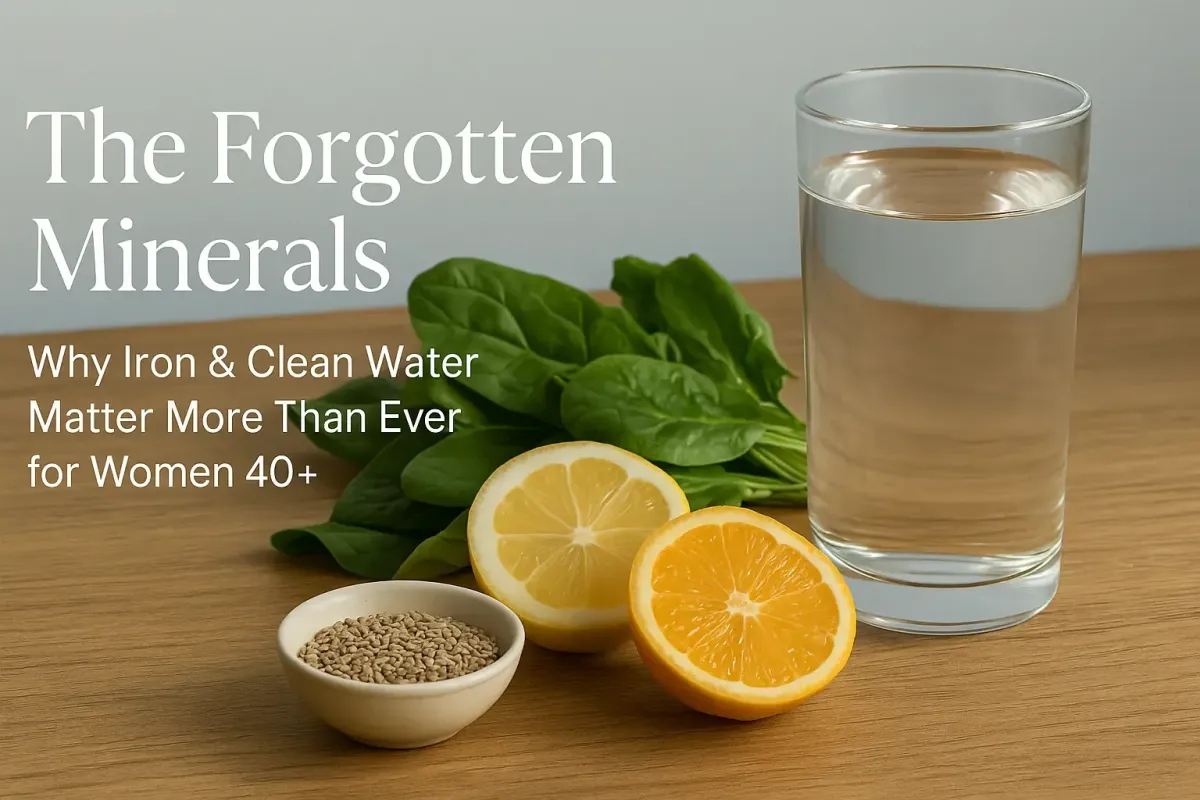
The Forgotten Minerals: Why Iron & Clean Water Matter More Than Ever for Women 40+
Why Iron Matters More Than You Think for Women Over 40
Iron is one of the most essential minerals for women over 40, yet iron deficiency remains one of the most common and most underdiagnosed nutritional shortfalls in women. If you have been experiencing persistent fatigue, brain fog, hair thinning, or low mood that does not improve with rest, your iron levels may be worth looking at. This guide covers why iron matters after 40, how to recognize the signs of deficiency, the best food sources, and how to improve absorption naturally.
Category: Nutrition and Metabolism | Read time:7 minutes
Key Takeaways
Iron deficiency affects an estimated 34 percent of women aged 18 to 50, and it is frequently underdiagnosed because symptoms overlap with hormonal changes.
Iron carries oxygen to every cell in the body, supports energy production, hormone regulation, and cognitive function.
Whole food sources of iron are generally better absorbed and gentler on digestion than synthetic supplements.
Pairing iron-rich foods with vitamin C significantly improves absorption, while calcium and caffeine can reduce it.
Why Iron Matters More After 40
Iron is responsible for carrying oxygen in your blood, fueling your cells, supporting immune function, and helping regulate hormones. Every cell in the body depends on iron to produce energy, and the brain relies on it for focus, memory, and mood regulation.
Despite how essential it is, iron deficiency is the leading cause of anemia worldwide, responsible for nearly two-thirds of all anemia cases (The Lancet Haematology). In the United States, an estimated 34 percent of women aged 18 to 50 are iron deficient (JAMA Network Open, 2024). Iron deficiency without anemia is at least twice as common as iron deficiency anemia, which means many women are running low without ever being diagnosed.
After 40, this becomes more complex. During perimenopause, heavier or more irregular periods can increase iron loss. At the same time, symptoms of low iron, such as fatigue, brain fog, and mood changes, are often attributed to hormonal shifts or stress rather than investigated further. This overlap means iron deficiency is frequently missed during the exact years when it matters most.
Signs You May Be Low in Iron
Iron deficiency does not always show up as full-blown anemia. Many women experience functional symptoms at levels that are technically within the "normal" range on standard blood tests but still low enough to affect how they feel. Common signs include:
Persistent tiredness or fatigue that does not improve with rest
Brain fog, difficulty concentrating, or poor memory
Low mood, irritability, or increased anxiety
Hair thinning or hair loss
Brittle nails or nails that crack easily
Shortness of breath during activities that used to feel easy
Cold hands and feet
Pale skin, especially inside the lower eyelids
Restless legs, especially at night
Frequent infections or slow recovery from illness
Many of these symptoms overlap with perimenopause and hormonal imbalance symptoms, which is one reason iron deficiency can go unrecognized for years. If several of these feel familiar, it is worth asking your healthcare provider to check ferritin levels specifically, not just hemoglobin.
How Iron Supports Energy, Hormones, and Brain Function
Energy
Iron is essential for producing hemoglobin, the protein in red blood cells that carries oxygen from your lungs to every tissue in your body. When iron is low, less oxygen reaches your cells, which means less energy is produced at the cellular level. This is why iron-deficient fatigue feels different from ordinary tiredness. It is deeper, heavier, and does not improve with more sleep.
Hormones
Iron supports the production of thyroid hormones, which regulate metabolism, energy, and body temperature. Low iron is associated with reduced thyroid function, which can worsen fatigue, weight gain, and cold sensitivity. Iron also supports the production of neurotransmitters like serotonin and dopamine, which influence mood, motivation, and emotional regulation.
Brain Function
The brain uses around 20 percent of the body's oxygen supply. When iron is low, oxygen delivery to the brain decreases, which can show up as brain fog, difficulty concentrating, poor memory, and slower processing speed. For women over 40 who are already navigating hormonal shifts that affect cognition, low iron can make these changes feel significantly worse.
Best Food Sources of Iron
Iron from food comes in two forms: heme iron (from animal sources) and non-heme iron (from plant sources). Heme iron is absorbed more efficiently, but both forms contribute to overall iron status.
Heme Iron Sources (Higher Absorption)
Red meat, especially beef and lamb - around 2 to 3 mg per 3-ounce serving
Organ meats such as liver - around 5 mg per 3-ounce serving (one of the richest sources)
Shellfish such as oysters, clams, and mussels - around 3 to 8 mg per serving
Dark poultry meat (chicken thighs, turkey legs) - around 1 to 2 mg per serving
Sardines - around 2 mg per can
Non-Heme Iron Sources
Lentils - around 6.6 mg per cooked cup
Chickpeas - around 4.7 mg per cooked cup
Spinach - around 6.4 mg per cooked cup (though absorption is lower due to oxalates)
Pumpkin seeds - around 2.5 mg per ounce
Fortified oats - around 3.4 mg per cooked cup
Tofu - around 3.4 mg per half cup
Dark chocolate (70 percent or higher) - around 3.4 mg per ounce
If you follow a mostly plant-based diet, be aware that non-heme iron is absorbed less efficiently. Including vitamin C at the same meal significantly improves absorption. For guidance on combining plant-based protein sources effectively, this guide on plant proteins covers what to look for.
How to Improve Iron Absorption Naturally
Getting enough iron from food is only part of the equation. How well your body absorbs it matters just as much. A few simple habits can make a significant difference:
Pair iron-rich foods with vitamin C.Adding citrus, bell peppers, tomatoes, kiwi, or strawberries to iron-rich meals can increase absorption by up to two to three times. A squeeze of lemon over lentils or spinach is one of the easiest ways to do this.
Avoid drinking tea or coffee with iron-rich meals.The tannins in tea and coffee can reduce iron absorption by up to 60 percent. Try to leave a gap of at least 30 minutes before or after eating.
Be mindful of calcium timing.Calcium competes with iron for absorption. If you take a calcium supplement, take it at a different meal from your highest-iron foods.
Cook in cast iron. Cooking acidic foods like tomato-based sauces in a cast iron pan can increase the iron content of the meal. This is a simple, low-effort way to add small amounts of iron over time.
Support stomach acid.Iron absorption depends on adequate stomach acid, which naturally decreases with age. Including apple cider vinegar or lemon water before meals can help support the digestive environment needed for absorption. For more on this, this guide on digestion after 40 covers the full picture.
Iron's Best Partners: Vitamin B12 and Zinc
Iron does not work alone. It functions best alongside other nutrients that support the same pathways.
Vitamin B12works with iron to produce healthy red blood cells. Without enough B12, the body cannot use iron effectively, even if iron levels are adequate. Good sources include eggs, fish, shellfish, and dairy. If you eat a mostly plant-based diet, B12 supplementation is often recommended.
Zincsupports immune function, hormone production, and wound healing, and it works alongside iron in several enzymatic processes. Good sources include pumpkin seeds, chickpeas, cashews, beef, and shellfish.
Folate(vitamin B9) is also essential for red blood cell formation and is especially important for women during the reproductive years. Good sources include leafy greens, legumes, and asparagus.
When fatigue, low mood, and hormonal changes appear together, it is often because these nutrients support the same systems. Addressing them together tends to produce better results than focusing on iron alone. For a broader look at the minerals that support women over 40, this post on minerals for energy and hormones covers the bigger picture.
When to Consider a Supplement
If you suspect your iron is low, the first step is to get your levels tested. Ask for a full iron panel that includes ferritin, serum iron, transferrin saturation, and TIBC (total iron-binding capacity). Hemoglobin alone does not give the full picture.
If supplementation is recommended, whole food iron supplements are generally gentler on the stomach and better absorbed than synthetic forms like ferrous sulfate. Look for supplements that use food-based forms of iron and include co-factors like vitamin C, B12, and folate for better utilization.
Always discuss iron supplementation with a healthcare provider, as taking iron when levels are already adequate can cause harm. Iron is one mineral where more is not necessarily better.
How Hydration and Water Quality Affect Mineral Absorption
Water plays a role in how well your body absorbs and uses minerals, including iron. Staying well hydrated supports digestive function, nutrient transport, and the elimination of waste products that can interfere with mineral balance.
If you use a water filter that removes everything, such as reverse osmosis, be aware that it also removes beneficial minerals like calcium, magnesium, and trace elements. Consider adding trace mineral drops or a pinch of mineral-rich sea salt to your filtered water to support hydration that nourishes rather than depletes.
Aiming for 8 to 10 glasses of water per day, ideally spread across the day rather than consumed all at once, supports the digestive environment needed for mineral absorption.
How Iron Connects to Your Bigger Wellness Picture
Iron does not exist in isolation. It is connected to energy, hormones, thyroid function, mood, cognition, immune health, and how well the body recovers from physical activity. When iron levels are adequate, many of these areas tend to feel more balanced.
For women navigating perimenopause, addressing iron is especially important because the symptoms of low iron and the symptoms of hormonal change overlap so heavily. Getting tested and addressing any shortfall can sometimes ease symptoms that seemed entirely hormonal.
Combined with attention to protein, fiber, magnesium, blood sugar balance, and gut health, iron becomes part of a more complete nutritional foundation for feeling well after 40.
A Gentle Place to Start
You do not need to overhaul your diet. Start by including one iron-rich food at lunch and dinner this week, and pair it with a source of vitamin C. Notice how your energy responds over the next few weeks. If you suspect your levels may be low, ask your healthcare provider for a full iron panel. Sometimes this one test can explain a pattern of fatigue that has been building for months.
If you would like more structured support with nutrition, minerals, and sustainable wellness after 40, the membership is designed to help you build a foundation that works for your body and your life.