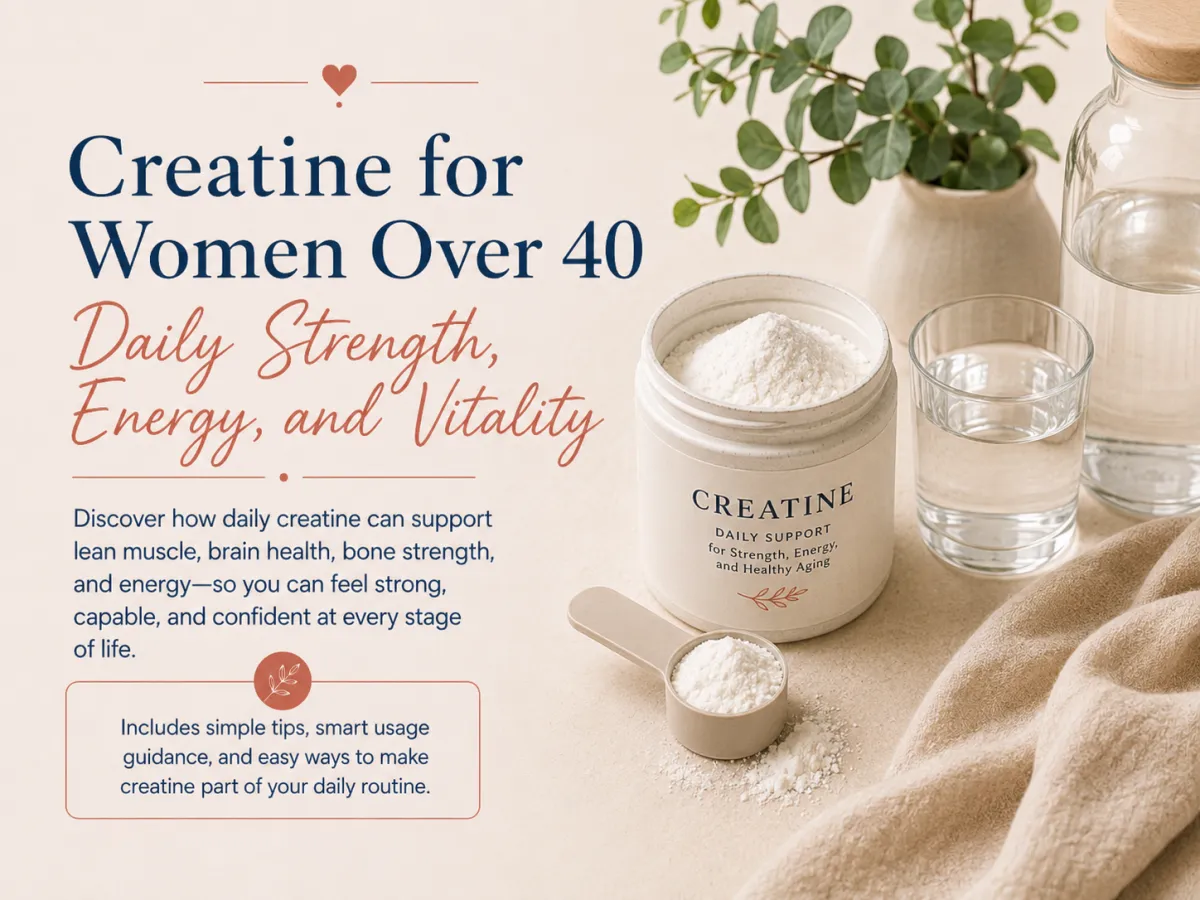
Creatine for Women Over 40: Benefits, Safety, and How to Use It
Creatine for Women Over 40: Benefits, Safety, and How to Use It
Creatine has quietly become one of the most talked-about supplements for women over 40, and unlike a lot of trends, this one has genuine research behind it. If you have wondered whether it is worth considering, or you have only ever associated it with gym culture, this guide breaks down what creatine actually is, what the research shows for women in midlife, and how to think about safety and dosage.
Category:Nutrition and Metabolism |Read time:8 minutes
Key Takeaways
Creatine is a naturally occurring compound, not a steroid or stimulant, and research shows it does not harm kidney function in healthy adults.
Women naturally store 70 to 80 percent less creatine than men, which may make supplementation more relevant, not less.
Research in postmenopausal women shows benefits for muscle strength, bone health, and cognitive function, particularly when paired with resistance training.
A standard maintenance dose of 3 to 5 grams a day is what most of the research is based on, though bone-focused studies use somewhat higher amounts.
What Is Creatine and How Does It Work
Creatine is a naturally occurring compound made from amino acids, and your body already produces some of it in the liver, kidneys, and pancreas. It is also found in animal foods like beef and fish. Most of it is stored in your muscles, where it helps regenerate the energy your cells use during short bursts of effort, like lifting a weight or climbing a flight of stairs.
Despite decades of use in sports nutrition, creatine research in women has historically lagged behind research in men. Women store approximately 70 to 80 percent less creatine naturally than men do (narrative review, PMC), which may partly explain why supplementation research is now turning more attention toward women specifically, particularly around the hormonal transitions of perimenopause and menopause.
Why Creatine Is Being Recommended for Women Over 40
Declining estrogen during perimenopause and menopause may reduce how efficiently the body uses creatine naturally, which is part of why researchers believe supplementation could matter more at this stage of life than earlier ones. This lines up with the same hormonal shifts that affectmuscle and strength after 40.
Research in this area is still growing, but a review in the Journal of the International Society of Sports Nutrition notes that creatine supplementation in postmenopausal women has shown positive effects on muscle mass, strength, bone health, and cognitive function, especially when combined with resistance training.
Creatine and Muscle Strength During Perimenopause
A small 14-week study of women in perimenopause and postmenopause who combined creatine with a twice-weekly strength training program found significant increases in lower-body strength, along with improvements in sleep quality among the perimenopausal participants specifically (PMC study). While the study group was small, the results echo a broader pattern seen across creatine and resistance training research: the two appear to work better together than either does alone.
This is worth underlining. Creatine is not a replacement for strength training. It appears to enhance the results of resistance work, which is why the two are best thought of as a pair rather than separate strategies.
Creatine, Bone Health, and Brain Function
Beyond muscle, two other areas of research stand out for women in midlife.
Bone health:a two-year randomized controlled trial found that women taking creatine alongside exercise lost 1.2 percent of bone mineral density at the femoral neck over the year, compared with nearly 4 percent lost in the placebo group (research summary, Join Midi). This does not mean creatine prevents bone loss entirely, but the difference between groups was meaningful.
Cognitive function:an eight-week randomized trial found that perimenopausal and menopausal women taking a daily creatine dose had improved reaction time and favorable changes in brain creatine levels compared with placebo (Journal of the American Nutrition Association, cited in Join Midi). This is an emerging area of research, but it lines up with what is known about the brain's high energy demands. The brain uses around 20 percent of the body's resting energy despite making up only about 2 percent of body mass, so a steady supply of cellular energy matters.
Reactive: Brain fog and slower recall during hormonal shifts →Regulated:Steadier reaction time and cognitive energy with supported creatine metabolism
Is Creatine Safe for Women Over 40
This is usually the first question that comes up, and it is a reasonable one. The short answer, based on the current evidence, is that creatine monohydrate is considered one of the most researched and safest supplements available for healthy adults (UCLA Health).
Long-term studies, including some using doses well above the standard maintenance amount, have found no evidence of kidney damage in people without pre-existing kidney conditions (narrative review, PMC). If you have kidney disease, liver conditions, or another condition that affects how your body processes supplements, it is worth speaking with your doctor before starting, as research in these groups remains more limited.
Common Creatine Myths
Myth: Creatine damages your kidneys.This is one of the most persistent misconceptions, and it is not supported by current evidence in healthy adults. The confusion often comes from creatinine, a separate marker that naturally rises with creatine use and can look concerning on a lab test without indicating actual kidney harm. If you take creatine and get bloodwork done, it is worth mentioning to your doctor so the numbers can be read in context.
Myth: Creatine causes bloating and water weight.Some people notice a small amount of water retention within the muscle cells themselves during the first week or two, particularly with a loading phase. This is different from the kind of bloating associated with digestion, and it typically settles once the body reaches a steady creatine level.
Myth: Creatine is a steroid.Creatine is a naturally occurring compound found in food, not a synthetic hormone. It does not work by altering hormone levels.
How Much Creatine to Take and When
Most of the research supporting creatine's benefits uses a standard maintenance dose of 3 to 5 grams per day, taken consistently. Some studies looking specifically at bone health have used slightly higher amounts, in the range of 0.1 grams per kilogram of body weight per day, though this is an area still being researched.
Some protocols include a short loading phase of around 20 grams a day, split into smaller doses over 5 to 7 days, before dropping to a maintenance dose. This is not essential. A consistent daily maintenance dose will reach the same saturation point, simply over a few weeks rather than a few days.
Timing appears to matter less than consistency. Taking it at the same time each day, with or without food, tends to work well for most people.
Does Creatine Work Without Strength Training
Creatine can still support energy availability and cognitive function on its own, but the strongest and most consistent results in the research come when it is paired with resistance training. If you are just starting tobuild a strength training habit, creatine is worth considering as a complement to that work rather than a substitute for it.
The two also connect to what you are eating. Adequateprotein intakecontinues to matter alongside creatine, since both play different but complementary roles in supporting muscle repair and maintenance.
Who Should Speak to a Doctor First
Creatine is not right for everyone, and a quick conversation with your doctor is worth having if any of the following apply to you:
You have kidney disease or a history of kidney issues
You have liver conditions
You are pregnant or breastfeeding
You are taking medications that affect kidney function
You have any other ongoing health condition you manage with a healthcare provider
For most healthy women over 40, creatine monohydrate at a standard dose is well tolerated, but checking in with your doctor first is always a reasonable step, especially if you are new to supplements generally.
A Gentle Place to Start
If you decide creatine feels right for you, starting simply is the best approach. A plain creatine monohydrate powder, taken at a consistent 3 to 5 gram daily dose alongside regularstrength training, is what most of the research is built on. There is no need to overcomplicate it with blends, loading phases, or added ingredients.
If you would like more structured support with movement, nutrition, and sustainable wellness after 40, the membership is designed to help you build a foundation that works for your body and your life.