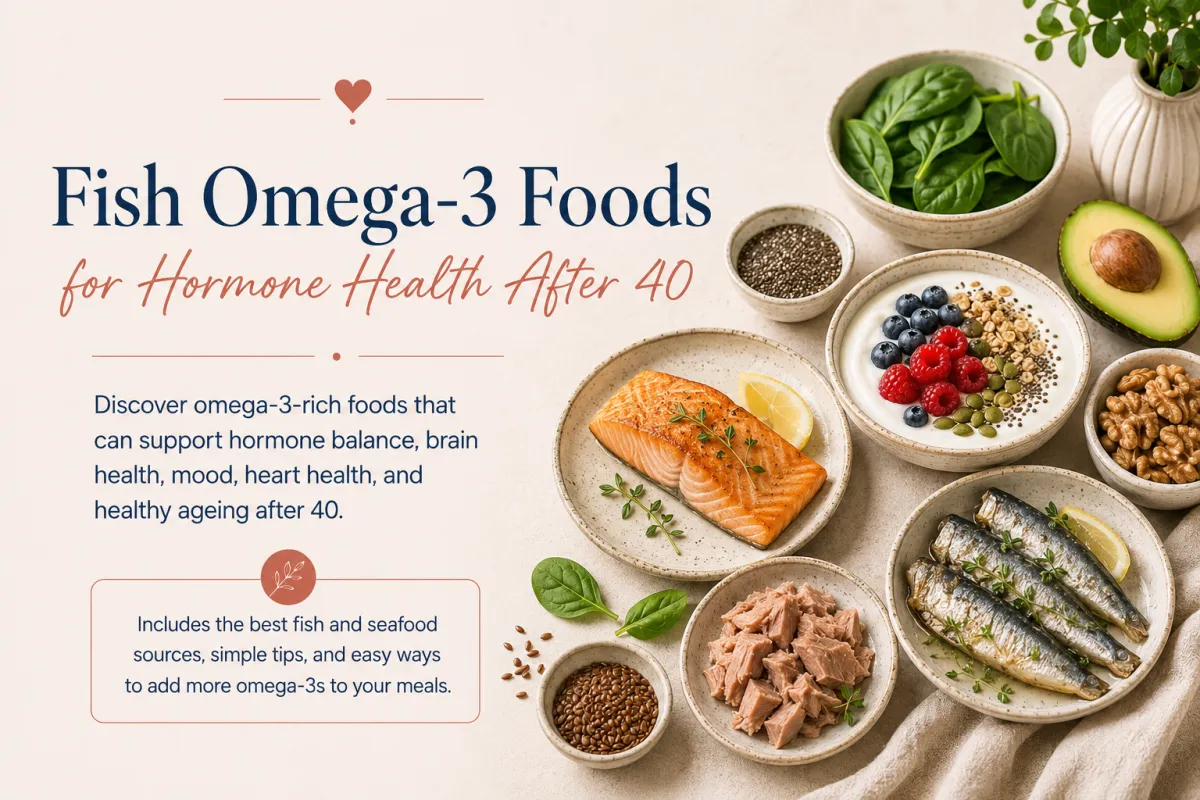
Best Fish and Omega-3 Foods for Hormone Health After 40
Best Fish and Omega-3 Foods for Hormone Health After 40
Omega-3 fatty acids are some of the most powerful anti-inflammatory nutrients available, and after 40, they become even more important. As estrogen declines, the body loses some of its natural ability to produce these essential fats, which means getting them from food matters more than ever. This guide covers why omega-3s support hormones, brain health, and inflammation after 40, which fish and foods to prioritize, and simple ways to include more in your meals.
Category:Nutrition and Metabolism | Read time:7 minutes
Key Takeaways
Omega-3 fatty acids support hormone balance, reduce inflammation, protect brain function, and support cardiovascular health, all of which become more important after 40.
The body's ability to produce long-chain omega-3s from plant sources declines as estrogen decreases during perimenopause.
Oily fish like salmon, sardines, mackerel, and anchovies are the richest dietary sources of the most beneficial omega-3s (EPA and DHA).
Most health organizations recommend at least 500 milligrams of combined EPA and DHA per day, which can be met by eating two to three servings of oily fish per week.
Why Omega-3s Matter More After 40
Omega-3 fatty acids are essential fats, meaning your body cannot make them on its own. They must come from food. There are three main types: ALA (found in plant foods like flaxseeds and walnuts), and EPA and DHA (found primarily in oily fish and seafood). EPA and DHA are the most biologically active forms and the ones most strongly linked to health benefits.
After 40, omega-3s become more important for several reasons. Estrogen naturally enhances the body's ability to convert plant-based ALA into the more active EPA and DHA. Research published in the British Journal of Nutrition shows that as women transition through menopause, this conversion ability declines. This means that women who previously relied on plant sources may no longer be producing enough EPA and DHA to meet their needs.
At the same time, the decline in estrogen during perimenopause triggers an increase in low-grade inflammation throughout the body (Harvard Health). Omega-3s are one of the most effective anti-inflammatory nutrients available, making them a natural counterbalance to the inflammatory changes that come with hormonal shifts.
How Omega-3s Support Hormones and Inflammation
Omega-3 fatty acids influence hormone health in several ways that are directly relevant to women over 40.
Reducing Inflammation
Chronic low-grade inflammation is connected to many of the symptoms women experience during perimenopause, including joint stiffness, fatigue, brain fog, and weight gain. EPA and DHA help reduce the production of inflammatory compounds in the body and support the resolution of inflammation. For women already focused on anti-inflammatory eating, including oily fish regularly is one of the most impactful additions you can make.
Supporting Brain Health and Mood
DHA is a major structural component of the brain. It makes up a significant portion of the fat in brain cell membranes, where it supports communication between neurons. Research from the Study of Women's Health Across the Nation (SWAN) found that higher omega-3 intake was inversely associated with depressive symptoms during perimenopause. For women experiencing brain fog, mood changes, or difficulty concentrating after 40, omega-3 status is worth paying attention to.
Supporting Cardiovascular Health
Cardiovascular risk increases after menopause as the protective effects of estrogen decline. EPA and DHA support heart health by helping to lower triglycerides, improve blood vessel function, and reduce blood pressure. The American Heart Association recommends at least two servings of oily fish per week for cardiovascular health.
Supporting Hormone Production
Omega-3 fatty acids provide the building blocks for hormone production, including prostaglandins that regulate inflammation, blood flow, and reproductive function. Adequate omega-3 intake supports the body's ability to produce and balance hormones more effectively, especially during a period of significant hormonal transition.
Best Fish for Omega-3s
Not all fish are equal when it comes to omega-3 content. The richest sources are cold-water oily fish, which contain the highest concentrations of EPA and DHA.
Wild salmon- one of the richest sources of EPA and DHA, with around 1,500 to 2,000 mg per serving. Also provides high-quality protein, vitamin D, and selenium.
Sardines- small, affordable, and packed with omega-3s, calcium, and vitamin B12. Around 1,300 mg of EPA and DHA per serving. Low in mercury due to their small size.
Mackerel- rich in omega-3s and one of the most affordable oily fish options. Around 1,000 to 1,500 mg per serving. Choose Atlantic or smaller varieties to reduce mercury exposure.
Anchovies- very high in omega-3s relative to their size and extremely low in mercury. Around 900 mg per serving.
Herring- another excellent cold-water option with around 1,700 mg of EPA and DHA per serving.
Trout (rainbow)- a freshwater option with around 900 mg per serving, plus protein and B vitamins.
Two to three servings of these fish per week is generally enough to meet the minimum recommended intake of 500 mg of combined EPA and DHA per day (American Heart Association and International Society for the Study of Fatty Acids and Lipids).
Plant-Based Omega-3 Sources
Plant foods provide ALA, which the body can partially convert to EPA and DHA, though the conversion rate is limited, especially after menopause. Plant sources are still valuable for overall nutrition and can complement fish intake, but they should not be relied on as the sole source of omega-3s after 40.
Flaxseeds- around 2,350 mg of ALA per tablespoon of ground flaxseed. Also a good source of fiber and lignans, which support estrogen metabolism.
Chia seeds- around 2,500 mg of ALA per tablespoon. Also provides fiber, protein, and magnesium.
Walnuts- around 2,570 mg of ALA per ounce. One of the richest nut sources of omega-3s.
Hemp seeds- around 1,000 mg of ALA per tablespoon, plus protein and other essential fatty acids.
Edamame- a modest source of ALA with additional protein and fiber.
For women who follow a plant-based diet and want to ensure adequate omega-3 intake, this guide on plant-based nutrition covers how to combine sources effectively.
Fish to Limit or Avoid
Some fish are higher in mercury and other contaminants, which can accumulate in the body over time. The following should be eaten less frequently or avoided, especially for women who are pregnant or planning to become pregnant:
Swordfish
Shark
King mackerel (different from Atlantic mackerel, which is lower in mercury)
Tilefish
Bigeye tuna
Canned light tuna is generally lower in mercury than albacore or bigeye tuna and can be included in moderation. The FDA recommends two to three servings per week of lower-mercury fish as a safe and beneficial intake level for most adults.
Simple Ways to Include More Fish and Omega-3s in Your Meals
Eating more fish does not need to be complicated or expensive. Here are some practical ways to include it more regularly:
Keep canned salmon and sardines in the pantry.They are affordable, shelf-stable, and ready to use in salads, toast, or pasta without any cooking.
Batch-cook salmon at the start of the week.Bake or grill a few portions and use them across lunches and dinners for the next few days.
Add anchovies to dressings and sauces.They dissolve during cooking and add a rich, savory depth without a strong fish flavor.
Try a simple fish taco or fish bowl.Baked cod or salmon with vegetables, avocado, and lime over rice or greens makes a quick, balanced meal.
Add ground flaxseed or chia seeds to breakfast.Stir a tablespoon into oats, yogurt, or smoothies for a plant-based omega-3 boost alongside your protein.
Use olive oil as your primary cooking and dressing oil.While not high in omega-3s, it is rich in oleic acid, which complements the anti-inflammatory effects of EPA and DHA.
How Omega-3s Connect to Your Bigger Wellness Picture
Omega-3s do not work in isolation. They are most effective as part of a broader approach that includes adequate protein,fiber,blood sugar balance, good sleep, and stress management.
For women navigating perimenopause symptoms, omega-3s address several of the underlying drivers at once: inflammation, mood changes, brain fog, cardiovascular risk, and hormonal fluctuations. Combined with attention to gut health and key minerals like magnesium, omega-3s become part of a more complete foundation for feeling well after 40.
A Gentle Place to Start
If fish is not currently a regular part of your meals, start small. Try adding one serving of oily fish this week, whether that is a piece of baked salmon, a can of sardines on toast, or a simple tuna salad. Add a tablespoon of ground flaxseed or chia seeds to your breakfast on the days you do not eat fish.
If you would like a structured plan that makes fish-based eating simple and practical, this month's membership includes a complete 4-week pescatarian meal plan with shopping lists, recipes, and balanced meals designed to support hormones, energy, and inflammation after 40.